Author: aircraftnews

  • Dreamliner

    The Boeing 787 Dreamliner has had a most unfortunate couple of weeks. There has been the worst publicity that any aircraft could have. An inflight fire or smoke in the cabin are the worst case scenario for aircrew and the public when it comes to air travel.

    I have avoided the temptation to jump on the band wagon as I have had the experience of working on an newly introduced aircraft type. There is no test like the daily operation of an aircraft, or any vehicle, to bring out a number of problems that the designer and regulatory authorities have not thought of. The Dreamliner has taken this to a whole new level with the type of problem and the world wide grounding of the fleet. If that wasn’t bad enough then the timeline of not only the fix but understanding the cause is seeing the confidence of the carriers fade away.

    There is only so much that the airlines can put up with before the shareholders make the decision to abandon the aircraft and look elsewhere in the competitive world of aircraft supply. Not only that but all the time the airlines are not flying the Dreamliner’s they already operate, the bills are piling up and the lawyers are lining up.

    The battery on the aircraft is touted as the source of the problem,which is ironic as it is there to solve problems when the normal power generation is not operating. This is not the first time this type of battery has given trouble. Cessna had them removed from the new Citation. In that case there was an off the shelf replacement which they could switch to. But it is my understanding that the Dreamliner batteries are so specific to the aircraft that a replacement is not possible in the short term. The whole aircraft is such a new concept that they are breaking ground in many aspects of the systems on board.

    I love the innovation and cutting edge development. But I think they had too much faith put into the battery type without a ‘plan B’. Lets hope the investigation comes to a successful conclusion soon for the sake of the company and the travelling public.

  • Air Canada Rouge

    Only a month after Westjet launch their Regional Airline in June 2013, Air Canada are starting their new vacation airline from the hubs of Toronto and Montreal. The promise is the vacation starts as soon as you board the aircraft.

    Initially starting with surplus aircraft drawn from the Air Canada fleet, the growth of Rouge is reported to be linked to the introduction of the Boeing 787 Dreamliner to Air Canada which will free up more aircraft for the Rouge fleet. The total Rouge fleet will number 50 aircraft when complete and Air Canada are not anticipating delays in fleet growth due to the electrical problems the Dreamliner is experiencing at the moment.

    The key to Rouge succeeding in a highly competitive vacation market is by cutting costs, which the unions have agreed to, by paying the crews less than crews at Air Canada. Another economy is up to 20% more seats on the aircraft to increase the profit margin of every flight.

    For more information regarding Air Canada Rouge try this link, http://www.aircanada.com/en/about/rouge.html

  • Westjet Encore

    Westjet have announced their first plans to enter the Regional Airline business. The new airline is called Westjet Encore and they will be using Bombardier Q400 aircraft.They are starting by connecting Fort St John and Nanaimo toVancouver and Calgary. This is a natural expansion for Westjet as they will now have a feeder airline to bring passengers to larger centres for onward flight with Westjet. These new routes start in June and they are also starting a Victoria to Vancouver service for less than $100 each way. For more information on the new routes try this link http://www.westjet.com/guest/en/deals/offers/summer-schedule.shtml

  • Air Canada Low Cost Carrier

    Where is Air Canada going with the new low cost carrier they are launching? I don’t mean geographically but in terms of their competition. Is there a niche for a low cost airline operating out of Canada and who are they competing against for your travel dollars? How are they going to differ from the present airline? Well, when they come into service, using 50 aircraft of the present Air Canada fleet, there will be a lot more seats on the aircraft and lower pay for the employees to make the model work.

    The natural competition will be other Canadian based carriers operating to the Caribbean, US and Europe. This means Air Canada as well but this is nothing new for them. They are supplying their regional partner Sky Regional with Embraer aircraft on the corridor route between Toronto and Montreal which competes with Air Canada Jazz.

    The theory with the new low cost airline is to attract the type of passenger that wants to pay less than an Air Canada ticket for a flight to a vacation destination. They are hoping to remove passengers from Westjet, Air Transat, Canjet and other carriers that feed the holiday market.

    An announcement coming soon from Air Canada will give more details of the new airline.

  • Transport Canada Oversight

    Is it working?

    There have been comments in the press, and always will be after an incident, about the lack of oversight from Transport Canada (TC) on the airlines. I work in the industry and have seen the transition from the traditional TC inspections to the self regulating model that has been developed and introduced in the airlines.

    A few years ago the TC inspector responsible for the company would arrange an inspection that took several weeks and delved into all aspects of the organization. This would then result in some findings which would be corrected by the company and all would be well. All it really meant is that the company was off the hook for a few years before they had another inspection.

    The new approach in self regulation, is for the company to carry out continual process auditing which is reviewed by TC when they come calling. This puts the onus on the company to audit, record, correct and follow up to check for effectivity of the corrective actions. TC only have to monitor the results which are presented to them.

    I believe, if done correctly, the airline is safer and processes are inspected more often than the TC inspectors could manage and in greater detail. This should make for a safer environment for the traveler.

  • Continental Airlines Dash 8 Aircraft

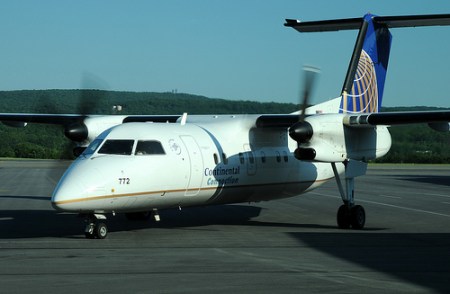
    dash-8The tragic accident of the Continental Airlines Dash 8 has generated a lot of speculation about the role of ice in the loss of control and subsequent crash of the aircraft. I am not going to suggest any cause of the accident as there are many knowledgeable people involved in the investigation that will come up with the answers.

    I would like to explain to those who are interested, why ice makes such a difference in the handling of the aircraft.  To understand the problem you have to have an idea of the theory of aircraft flight.

     The wings have a shape which produces lift as they travel through the air. However, they also produce drag and they have a weight that is a gravitational force.  The weight of the wing acts through the centre of gravity; this is the point that the wing would balance on if it were removed from the plane. The centre of lift is where all the lift forces could be measured and  opposes and is normally behind the center of gravity. Because it is behind the centre of gravity there is a twisting force to lower the front of the wing. If this were not opposed then the aircraft would not be able to fly.

    The tail is the place where the opposition is generated. The tail surfaces are designed to generate a downward force to oppose the twisting force of the wing and keep the aircraft level.  So, everything is in balance.  There are times when more lift is required, for the aircraft to take off or fly slower so it can land.  To achieve this flaps on the back of the wing can be lowered to increase the size of the wing and produce more lift.

    When the flaps are lowered the centre of lift moves rearwards and the twisting force of the wing increases, this is normally opposed by moving the trim on the tail to increase the opposition force and raise the nose. There is a range of trim available which is sufficient for normal operation.

    This is the way the aircraft is designed to operate. When ice collects on the wings it changes the shape of the wing so that some of the lift is lost, it also increases the weight of the wing which can move the center of gravity forward.  The build up of ice on the tail will add even more weight to the aircraft and reduce its ability to oppose the twisting force on the wing. The result is the same as lowering the flaps without the added lift that would be generated. The nose would be lowered and  the way to deal with this would be to trim the tail to increase the downward force.

    This is exactly what the autopilot does. As the ice builds up on the wings and tail the autopilot trims the tail to increase the downward force. This can be a very slow and insidious process as the autopilot will use more trim to keep the aircraft level. If the crew are not aware of the situation they may find that the trim limit has been reached before they  know they have a problem.  If they then change the status quo by lowering the landing gear or the flaps the auto pilot will be unable to trim the aircraft and will disengage leaving the crew with a very dangerous nose down attitude for which instant recognition of the problem and the correct response will be needed to avoid a loss of control.

    This situation is normally also at low altitude and airspeed and is very hazardous. Most operators regard icing very seriously and when in icing normally instruct the crew to fly the plane manually to make them aware at an early stage of the amount of trim they are using to control the attitude. They can then decide if they need to climb out of the icing conditions or take other action to avoid increasing ice build up. There are different systems on different aircraft which either prevent ice forming (anti-icing) or remove it as it forms (de-icing). De-icing that uses air to inflate boots to distort the leading edge of the wing and break up the ice which has formed was the system on the Dash 8 in Buffalo. This system requires the ice be allowed to build up to a certain thickness before the boots are inflated as thin ice will not break off. An automatic timer will inflate the boots periodically and there is a manual system if the automatic periods are too long.

    The tragic loss of the aircraft in Buffalo has brought the problem of icing into the spotlight but aircrews and airplanes have been dealing with it ever since flying began and there are many safeguards built into the system. I hope this has shed some insight on the hazards of ice on aircraft and the means to combat it.
  • There is Hope for Diamond Owners

    The following article must be good news for Thielert powered Diamond aircraft owners after months of indecision.
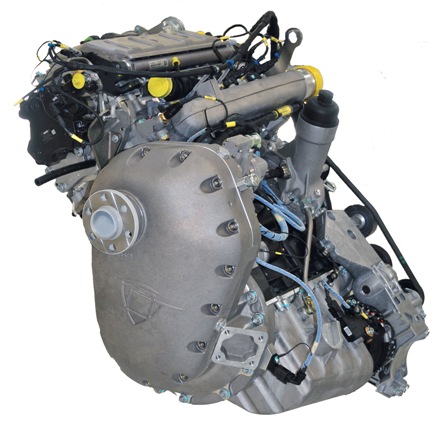
    Diamond certifies Austro AE 300 turbo-diesel

    Diamond Aircraft has received European type certification for its turbo-diesel Austro AE 300 engine, a development the company says “secures its future.”

    Diamond had been scrambling to develop an alternative to the Thielert Centurion 2.0 turbo-diesel engine after Thielert filed for bankruptcy in April last year. The Centurion powers more than 400 DA40 piston singles and more than 500 DA42 twins. Diamond has not ruled out offering a Thielert option on future aircraft assuming the company recovers after a pending sale.

    “The complete program developed into one that was significantly more complex than originally anticipated,” says Diamond CEO Christian Dries of the certification effort, which ultimately took 42 months to complete at a cost of  €48 million. Dries says there are already 27 DA42 NG aircraft powered by AE 300 engines on the production line and type certificate for the aircraft is expected “imminently”.

    Dries says Diamond next will certify the engine as forward-fit for the DA40 and DA50, and will develop an AE 300-powered version of the DA42 multi-purpose platform. The company will also offer a retrofit version for its existing Thielert diesel-powered aircraft.

    So if all goes well those diesel engined dreams of avoiding all the problems with traditional engines may be alive again.Austro Engine

  • Fly By Wire

    Well it looks like the science fiction is being overtaken by reality. Recently a Gulfstream 550 jet was controlled by a light signal from the cockpit to one of the flying controls. The controls of an aircraft are traditionally moved by the pilots commands being transmitted to the control via a stainless steel cable or aluminum rods. This also involves pulleys and bellcranks to move the cable in the correct direction. Then ‘fly by wire’ was developed which relies on electrical signals to move the control surfaces. This saved weight and allowed computers to control the aircraft without the traditional cables.

    Now we have a signal from the pilots controls changed into a light pulse which is transmitted via fiber optics to a receiver where it is converted back to an electrical signal to move the control. This saves even more weight and is a lot more reliable than an electrical wire which can short or break. There is no danger of losing the signal if even a fraction of the fiber optic cable is left intact after it has been damaged.

    If you think this is ground breaking then you will be amazed to learn that in the same experimental aircraft there was a ‘fly by wireless’ system operating as a back up which as the name suggests has no connection from the cockpit to the control except a radio signal. This has to be the ultimate in weight saving and reliability. When it is fully tested and approved it will be almost unheard of to lose control of the aircraft due to mechanical or hydraulic failure as the systems will not rely on them.

  • Qantas Jet Plunges out of control. Updated

    A terrifying headline to all who fly in aircraft and it is a very real risk in the age of modern air travel. The infrequency of this occurrence is thankfully rare and the majority are weather related and avoidable.

    So, what went wrong with the Qantas Airbus A330-300 aircraft? During the flight the aircraft had several departures from its assigned altitude, the result of these changes were injuries and panic in the cabin as people who were not wearing their seat belts were thrown around.

    The majority of modern aircraft are flown by a fly by wire system; this is in response to the development of flight control computers which control the aircraft’s altitude and direction of the flight. These computers are designed to keep the aircraft within its design limits. If the aircraft is going too slow, too fast, or approaching the design limits it will take action to correct the situation.

    So, how does the computer know whats going on? There are sensors on the aircraft which measure the outside air temperature, air speed, altitude and angle of attack, (the amount of nose up or nose down), all these inputs, and many others, are sent to an Air Data Inertial Reference Unit (ADIRU) which converts them to signals for the Flight Computer so they can operate the flight controls the way the pilots require. 

    On the Qantas aircraft the ADIRU gave incorrect data to the Flight Computers which made the aircraft climb to reduce an incorrect overspeed and then dive to avoid a non existent stall due to low airspeed. The aircraft autopilot was engaged until the unexpected climb when it disconnected and the crew flew the aircraft themselves. Even though the crew was flying the aircraft the inputs from the ADIRU still continued to affect the aircraft. The design of the system is to keep the aircraft within its limits and the ADIRU was giving erroneous information to the Flight Control Computer that these limits were being approached. The effects were minimised by the crew but they were still bad enough to cause inuries to people who were in the cabin.

    This is the first known occurrence of this type of failure with the ADIRU.  Airbus have issued a Telex to all the operators of this type of aircraft to provide operational actions to minimise the effects in the event of this happening again. There are 3 ADIRU’s and 3 Primary Flight Computers on the aircraft control system and the investigation will now concentrate on how a failure with one had such an effect on the aircraft.


    Update

    There has been another similar incident with a Qantas Airbus A320 in the same area as the one noted above. This is an area where strong military radio transmitters are in use. There is a growing suspicion that the radio transmissions may interfere with the operation of the auto pilot. In this latest case the pilots were able to control the aircraft and return to there departure point.

  • Boeing 777 Trent engine problems with ice.

    The US Federal Aviation Authority have now issued an Airworthiness Directive (AD) concerning the problems with ice in the fuel system of Boeing 777-200 and 300 airplanes fitted with Rolls Royce Trent 800 engines. The AD requires the crew to monitor the fuel temperature within 3 hours of top of descent and if it is below a certain temperature they must increase the engine power to prevent the formation of ice in the main tank fuel supply system. They can do this by stepping up to a higher altitude or increase the airspeed. There is no requirement to carry out this procedure if the aircraft is not fitted with Trent 800 engines.

    There is also a procedure for the circulation of the fuel on the ground by a certified mechanic to prevent the formation of ice.

    This AD is a result of the problems encountered in January 2008 by a British Airways Boeing 777 which failed to respond to a command for increased thrust while the aircraft was on approach to London Heathrow airport and landed short of the runway. The interim report suggested ice formed in the main fuel tank supply system during low fuel flow conditions in cruise flight. The ice then dislodged and caused a restriction in the fuel supply because of high flow conditions due to the lower altitude during approach.

    No doubt there will be more measures to prevent the formation of ice from the engine and aircraft manufacturers but in the mean time the FAA are counting on this procedure to prevent the recurrence of the fuel restriction and loss of engine power.