Author: aircraftnews

  • Q400 Landing Gear Collapse

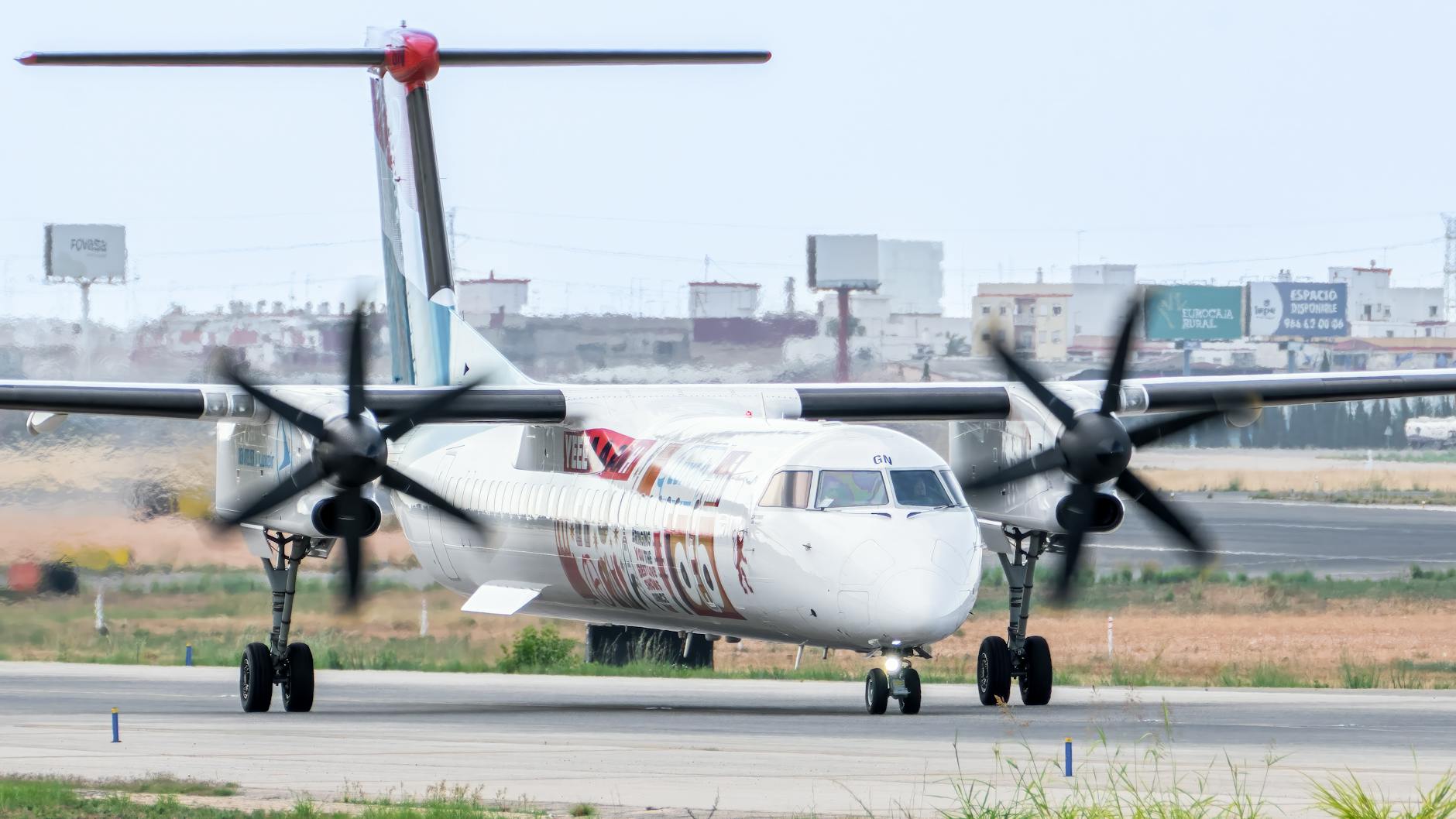
    Photo by Rafael Minguet Delgado on Pexels.com

    A Q400 aircraft landing at Halifax International Airport in Nova Scotia suffered a landing gear collapse after an uneventful flight. The Transportation Safety Board initial report found that the aircraft had a tire failure on takeoff. Upon landing, the tire remnants started rotating. This caused enough vibration for the main landing gear to unlock and collapse.

    When the propeller contacted the runway the blades broke off and the engine was badly damaged. The aircrew declared a Mayday and secured the aircraft for an emergency evacuation on the runway. All passengers and crew successfully left the aircraft with no serious injuries.

    As the investigation continues I would like to describe the configuration of the landing gear on the Q400. On the Down selection, the gear doors open. The main landing gear is hydraulically lowered aft from the engine nacelle. The Actuator linkage travels overcenter and locks, the landing gear doors then close again. It is held in the down position by hydraulic pressure and large springs.

    The Q400 is over 25 years old and is no longer in production. It is operated all over the world and has proven to be a reliable aircraft. The failure of the landing gear due to tire remnants vibration is not a new problem. It is unlikely the investigation will call for major modifications as a solution to this accident.

  • Q400 Landing Gear Collapse: Causes and Impact

    A Q400 aircraft landing at Halifax International Airport in Nova Scotia suffered a landing gear collapse after an uneventful flight. The Transportation Safety Board initial report found that the aircraft had a tire failure on takeoff. Upon landing, the tire remnants started rotating. This caused enough vibration for the main landing gear to unlock and collapse.

    When the propeller contacted the runway the blades broke off and the engine was badly damaged. The aircrew declared a Mayday and secured the aircraft for an emergency evacuation on the runway. All passengers and crew successfully left the aircraft with no serious injuries.

    As the investigation continues I would like to describe the configuration of the landing gear on the Q400. On the Down selection, the gear doors open. The main landing gear is hydraulically lowered aft from the engine nacelle. The Actuator linkage travels overcenter and locks, the landing gear doors then close again. It is held in the down position by hydraulic pressure and large springs.

    The Q400 is over 25 years old and is no longer in production. It is operated all over the world and has proven to be a reliable aircraft. The failure of the landing gear due to tire remnants vibration is not a new problem. It is unlikely the investigation will call for major modifications as a solution to this accident.

  • PW1100G Geared Turbo Fan

    Pratt and Whitney have found themselves in a strange situation. Their order book is brimming with orders for the PW1100G ( Geared Turbo Fan) but the engine used in the Airbus 320/321 Neo is being removed in record numbers for repair. In total 1200 engines will need repairs. The problem is a number of small cracks appearing in the powdered metal used in the engines High Pressure Turbine disks that were manufactured between 2015 and 2021.

    At the moment Pratt and Whitney are producing more engines than are being removed to bring AOG (Aircraft On Ground) rates down. The defect is having an effect on multiple airlines in the busy summer season. Pratt and Whitney have increased engine production to minimize the downtime of existing customers by having engines available. Despite this, approximately 10% of the GTF fleet is parked awaiting engines. Indian airline Go First recently cited the engine as the primary reason they filed for bankruptcy.

    There are also problems with the PW1500G series engine installed in the Airbus 220. The reliability of the engine is well below the target that Pratt and Whitney expect. Some PW1524G engines in the A220-300 are being removed at less than a thousand landings instead of the forecast 5260 landings. There is an Engine Airworthiness Directive for inspection of the engine fan due to inflight shutdowns and the failure of fan blades.

    Now, in my experience there are always teething troubles with new designed engines that only appear after operational real world experience. The manufacturers do their best to cover all the bases to achieve certification from the regulator but, they can’t anticipate all the environmental affects that the engines will experience.

  • Singapore Airlines B777 Fire on Landing

    Singapore Airlines Flt SQ368 to Milan returned to Singapore Changi airport after a low oil indication on the right hand engine. The crew handled the return by the book and the aircraft landed with no issues and to a round of applause from the 222 passengers on board. However, the applause was short lived as it became apparent the right hand wing was fully engulfed in flames. Remarkably the passengers and crew remained on board and calmly waited for the emergency services to extinguish the flames before disembarking via a set of steps! This would not have been believable in a work of fiction but there a videos from the aircraft passengers who passed the time recording the event through the aircraft windows. Kudos to them and the crew for not rushing into an uncertain mass evacuation and possible injury at the first sign of danger. I can  only assume the crew were following the instructions of the emergency services to remain on board. The following is a media release from the Civil Aviation Authority of Singapore. 

    Media Release

    27 Jun 2016

    CAAS Media Statement on Singapore Airlines (SQ368) Incident

    Early this morning, SQ368, a Singapore Airlines (SIA) B777 aircraft bound for Milan, chose to return to Singapore as the indicator for its right engine had shown oil loss.
    Shortly after landing, a fire was observed to have occurred in the vicinity of the aircraft’s right engine. Changi’s Airport Emergency Service, which was already on standby, responded promptly and the fire was extinguished within 5 minutes. SATS also contributed to ensuring the safety of the passengers and flight crew. No one was hurt during the incident.
    The runway on which the aircraft landed was closed for about 5 hours for repairs and clean-up. Landings and take-offs continued on the other runway. Whilst some flights were impacted, all flights were able to take off within one hour of their scheduled departure times.  
    CAAS will be investigating to determine the causes of the incident. The Ministry of Transport’s Air Accident Investigation Bureau will also be conducting an independent investigation.  

  • Spirit Airlines Pressurization Problems

    A Spirit Airlines flight out of Detroit was forced to turn back shortly after takeoff on Friday due to possible loss of cabin pressure, the airline said.

    Flight 417 took off at about 6:30 a.m. local time from Detroit Metropolitan Airport en route to Fort Lauderdale-Hollywood International Airport in Fort Lauderdale, Florida, Spirit Airlines said in a statement.

    Not long after takeoff, the flight turned back to the airport and landed safely “following a possible loss of cabin pressure,” it said. No injuries were reported.
    It was not immediately clear what had indicated a loss of cabin pressure or exactly how long into the flight the issue became evident. Airline officials were not immediately available to provide additional details.
    People identifying themselves as passengers on the flight posted photographs of themselves to social media with bright yellow oxygen masks affixed to their faces. The masks, which prevent the lightheadedness and unconsciousness cabin pressure loss can result in, are typically deployed during cabin pressure issues.

    (Reporting by Laila Kearney; Editing by James Dalgleish)

  • Dreamliner Nightmare.

    Dreamliner fire at Heathrow.

    How much bad luck can an aircraft type have before the orders dry up and the the public wont fly on it? The one thing which can kill an aircraft is the tendency to have fires. The public will not want to be on an airliner which is periodically filling with smoke.

    When this aircraft concept was announced many years ago I knew that this would be a unique design and be, to use the over worked cliche, cutting edge.There would be huge challenges with the extensive use of composites, the reduction of traditional, proven hydraulic systems and the complete exclusion of the use of bleed air from the engines. All of these were completely different from the traditional method of constructing and operating an airliner.

    There were numerous set backs in the development which raised costs into billions of dollars. Then after the aircraft went into service the aircraft lithium ion batteries failed to operate correctly resulting in a worldwide grounding of the Dreamliner. With this problem resolved, but not solved, we now find ourselves with a fire in an Ethiopian Airlines aircraft at Heathrow which is being attributed to the ELT, the device which transmits an emergency location signal when triggered by a high G situation. This problem, if proven, is as unique as the aircraft due to the scarcity of any other incidents related to this component. The most common failure is an unintentional transmission due to a faulty ELT, but a fire is not something that anyone can recall being reported before.

    I hesitate to mention it but the ELT is powered by lithium ion batteries and that could really be the only source of power to start a fire. The British investigators have now called for all B787 ELT’s to be removed or set inert during the investigation.

    The technology in the Dreamliner is unique and Boeing are taking the lead, and the hits, for this innovation. Maybe, like Concorde before it, the Dreamliner will be a fantastic one off airliner when all the problems are resolved. There is no doubt that composite will be used in other aircraft, but the extensive use of new electrical systems will need more development before other manufactures jump on that band wagon.

    I can only imagine the stress being felt in the boardroom of Boeing in Seattle but I think there is nothing left to do but work with the regulators and get this Boeing going.

  • Asiana Airlines Boeing 777 crash at San Francisco

    There is a lot of information and conjecture coming out in the press regarding the reason the Boeing 777 hit the sea wall during the attempted landing at San Francisco. There will be a definite answer from the NTSB when the investigation is completed which could take months to finalize. Regardless of any mechanical or electronic failures in the aircraft that may have contributed to the crash, the investigation will consider the Human Factors involved. There are always human factors involved and they go well beyond the crew and the circumstances of this particular flight.

    The NTSB will construct a timeline for each crew member going back at least 72 hours. This will include all rest and work periods, medications or personal events which could influence concentration or mood. Crew interaction will be examined to ensure the appropriate actions were not affected by personalities in the cockpit. There will be an examination of the distractions and circumstances in regard to the approach into the airport, and also any distraction warnings or unusual circumstances within the aircraft during the flight.

    It seems to be common knowledge that there was training taking place in the cockpit during the flight. Training of the ‘pilot flying’ during the approach to San Francisco will be examined to assess the amount of supervision provided by the training Captain. This is particularly important as the responsibility to maintain the safety parameters lies with the training Captain if there is a departure from Standard Operating Procedures or erosion of safety limits.

    The reasons for this crash will be many and varied as the Human Factors reach into all aspects of the Asiana Airlines operation of the aircraft in their fleet. The reason could cross all types of aircraft and operations so lessons will be learned and changes and improvements made to prevent this type of accident occurring again in all airlines and operators.

  • Boeing and Airbus on track?

    The Boeing Dreamliner is back in the air and the Airbus A350 is completing the first elements of the flight test program required for certification. So all is well in the Big Two manufacturers world. Or is it, such is the nature of the business that this assumption will never be accurate. There will always be setbacks and problems when each airframe, engine combination is pushing back the boundaries of fuel economy and efficiency.

    There is a huge requirement to reduce all the negatives like fuel burn and aircraft weight while increasing the load and range of the aircraft. The development of the airliner design from the first jet airliner, the De Havilland Comet, to the latest Boeing or Airbus aircraft has been amazing in the last 60 years. Every time I think they have reached the ultimate in design they exceed it with the next aircraft.

    The Boeing 737 was, and still is the work horse of the Seattle based manufacturer. It was challenged by the A320 family and now the Big Two are competing for another prize with the 787 and A350 by flying non stop from London England to Sydney Australia as a regular commercial route.

    Quite amazing that Louis Bleriot managed the first powered flight across the English Channel in 1909 and now in 2013 we are vying for non stop scheduled flights from London to Sydney.

    I can’t wait to see what they will come up with next.

  • B787 Dreamliner battery fix?

    There is some progress in the Boeing 787 Dreamliner battery problems. Boeing have given the FAA full details of a fix for the Lithium Ion battery overheating problem. Although the details are being kept under wraps, the fix has to include a new container for the battery which will prevent damage to the aircraft in case of fire and a method of venting fumes outside. There also has to be a redesign of the wiring or monitoring system to prevent the battery overheating in the first place.

    Further investigation in Japan, where both All Nippon Airways and JAL have had battery incidents on their Dreamliner’s, has resulted in wiring problems being discovered connecting the APU and the Aircraft main battery. The details of these problems are still being investigated and reported to Boeing.

    The original problem with the battery has not been discovered so all possible causes have been identified and fixes proposed to address them. The real test will be when the aircraft starts operating again as there is only so much that can be simulated on the ground or by controlled test flights.

    A long term fix may be the change of the battery type but nobody is talking about that.

    The update from the NTSB that was published in December 2014 blamed the battery problem on the design and possible manufacturing issues with the batteries. The blame was spread between the FAA and Boeing for not considering the consequences or even possibility of a battery cell overheating and affecting other cells. The manufacturing process was also targeted with foreign material found to be introduced into the batteries.

  • Airbus A350-900

    A350-900

    Airbus are reporting there will be no delay to the production and testing schedule of the A350 due to the problems with Lithium-Ion (Li-on) batteries.

    While Boeing are searching for a solution with the B787 Dreamliner battery problems Airbus are pressing ahead with then A350 and have replaced the planned Li-on batteries in favour of the more common Ni-Cad type.There are a number of problems with being the ‘first’ to use new technology and Boeing have taken on the brunt of the problems with the Dreamliner.

    Airbus have been developing their own twin engined wide bodied challenger to the B777 and B787 in the A350. This is the first step into the new technology of extensive carbon fibre for Airbus who are using it as the main component in the fuselage and the wings. This will allow a fuel saving to compete with Boeing on the non stop long distance routes from Europe to Australia and New Zealand.

    Although I would need a good vacation after a London to Sydney 19 hour non stop flight. It is amazing that Bleriot only managed the first crossing of the English Channel in an aircraft from England to France in 1909, around 25 miles, and in 1989 a Qantas B747 completed a non stop flight from London to Sydney 10,500 miles as a publicity stunt.

    Something that would not have helped Bleriot is the engine developed for the A350, which weighing in at just over 6 tonnes would have been bit much for his aircraft!

    The Trent XWB-84 has completed all certification and is being shipped to Toulouse from Rolls Royce for installation. This engine will produce up to 84,000 lbs of thrust required for the first A350-900 which will be completing the flight testing of the aircraft design. Changes to the thrust of the engine will power the other two variants of the aircraft. The increased thrust for the A350-1000 will be achieved by increasing the core engine power, temperature and fan speed rather than the diameter of the engine. Due to this approach nearly 80% of the line replacement units will be common to the engine variants.

    The A350 is scheduled to start flight testing this summer and for those who would like to keep informed of developments here is a link http://www.a350xwb.com/#