Category: sydney

  • Airbus A350-900

    A350-900

    Airbus are reporting there will be no delay to the production and testing schedule of the A350 due to the problems with Lithium-Ion (Li-on) batteries.

    While Boeing are searching for a solution with the B787 Dreamliner battery problems Airbus are pressing ahead with then A350 and have replaced the planned Li-on batteries in favour of the more common Ni-Cad type.There are a number of problems with being the ‘first’ to use new technology and Boeing have taken on the brunt of the problems with the Dreamliner.

    Airbus have been developing their own twin engined wide bodied challenger to the B777 and B787 in the A350. This is the first step into the new technology of extensive carbon fibre for Airbus who are using it as the main component in the fuselage and the wings. This will allow a fuel saving to compete with Boeing on the non stop long distance routes from Europe to Australia and New Zealand.

    Although I would need a good vacation after a London to Sydney 19 hour non stop flight. It is amazing that Bleriot only managed the first crossing of the English Channel in an aircraft from England to France in 1909, around 25 miles, and in 1989 a Qantas B747 completed a non stop flight from London to Sydney 10,500 miles as a publicity stunt.

    Something that would not have helped Bleriot is the engine developed for the A350, which weighing in at just over 6 tonnes would have been bit much for his aircraft!

    The Trent XWB-84 has completed all certification and is being shipped to Toulouse from Rolls Royce for installation. This engine will produce up to 84,000 lbs of thrust required for the first A350-900 which will be completing the flight testing of the aircraft design. Changes to the thrust of the engine will power the other two variants of the aircraft. The increased thrust for the A350-1000 will be achieved by increasing the core engine power, temperature and fan speed rather than the diameter of the engine. Due to this approach nearly 80% of the line replacement units will be common to the engine variants.

    The A350 is scheduled to start flight testing this summer and for those who would like to keep informed of developments here is a link http://www.a350xwb.com/#
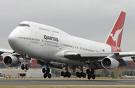
  • Qantas 747 Aircraft Maintnenance Problems

    A Qantas 747 en-route from Singapore to London which had to land at Frankfurt with an engine shut down due to a vibration warning is the latest incident to plague the airline.

    The recent explosion that resulted in a large hole in the side of a Qantas Airlines Boeing 747-400 has been confirmed to have been caused by a failed emergency oxygen cylinder.  This is believed to be the first occurrence of a cylinder failure on board an aircraft. The manufacturer of the cylinders requires the cylinders to be removed from the aircraft and undergo hydrostatic testing every 3 or 5 years depending on the model. Providing Qantas have kept to the schedule they cannot be blamed for the failure. 

    There have been several more incidents with Qantas aircraft in the last two weeks which has brought the harsh light of public scrutiny to the airline. A Boeing 767 had to return to the airport when fluid was spotted coming from the aircraft on take off by Air Traffic Control. This turned out to be an hydraulic leak. The other was a Boeing 737-800 which had an open undercarriage door after the landing gear was selected up after take off. Another hydraulic leak from the nose wheel steering system closed the runway at Sydney for40 minutes while the oil was cleaned up.

    Was this a series of coincidental faults or an indication of an underlying problem with the maintenance of the aircraft?  To my mind an airline with a safety record second to none and unrelated incident on different types of aircraft would suggest the former.  Qantas and the Australian Aviation Authority have a Safety Management System in place which other countries, including the US and Canada, are still aiming to achieve. It consists of a program of self assessment, risk analysis and investigations into incidents which ensure lessons are learnt and the probability of a repetition of the events is minimised.

    However, the Qantas airlines flight attendants have requested assurances from Qantas management that there is nothing wrong with the aircraft and these incidents are coincidental. Also, the Australian Aviation Authority has begun a two week assessment of Qantas to ensure the safety systems are at work in the company. The mechanics spokesman has said they have always done the best work possible but are now doing it while subject to budget restraints.

    Third party maintenance is a sticking point with the mechanics that fear the standards they are aiming for will not be achieved by sending the aircraft to Hong Kong and Malaysia for heavy maintenance checks. A 767 had to be grounded on return from Malaysia recently with over 90 snags.  The aircraft that suffered the explosion is expected to be back in service in November 2008 at a cost of $10 million.