Category: aircraft engine

  • PW1100G Geared Turbo Fan

    Pratt and Whitney have found themselves in a strange situation. Their order book is brimming with orders for the PW1100G ( Geared Turbo Fan) but the engine used in the Airbus 320/321 Neo is being removed in record numbers for repair. In total 1200 engines will need repairs. The problem is a number of small cracks appearing in the powdered metal used in the engines High Pressure Turbine disks that were manufactured between 2015 and 2021.

    At the moment Pratt and Whitney are producing more engines than are being removed to bring AOG (Aircraft On Ground) rates down. The defect is having an effect on multiple airlines in the busy summer season. Pratt and Whitney have increased engine production to minimize the downtime of existing customers by having engines available. Despite this, approximately 10% of the GTF fleet is parked awaiting engines. Indian airline Go First recently cited the engine as the primary reason they filed for bankruptcy.

    There are also problems with the PW1500G series engine installed in the Airbus 220. The reliability of the engine is well below the target that Pratt and Whitney expect. Some PW1524G engines in the A220-300 are being removed at less than a thousand landings instead of the forecast 5260 landings. There is an Engine Airworthiness Directive for inspection of the engine fan due to inflight shutdowns and the failure of fan blades.

    Now, in my experience there are always teething troubles with new designed engines that only appear after operational real world experience. The manufacturers do their best to cover all the bases to achieve certification from the regulator but, they can’t anticipate all the environmental affects that the engines will experience.

  • Asiana Airlines Boeing 777 crash at San Francisco

    There is a lot of information and conjecture coming out in the press regarding the reason the Boeing 777 hit the sea wall during the attempted landing at San Francisco. There will be a definite answer from the NTSB when the investigation is completed which could take months to finalize. Regardless of any mechanical or electronic failures in the aircraft that may have contributed to the crash, the investigation will consider the Human Factors involved. There are always human factors involved and they go well beyond the crew and the circumstances of this particular flight.

    The NTSB will construct a timeline for each crew member going back at least 72 hours. This will include all rest and work periods, medications or personal events which could influence concentration or mood. Crew interaction will be examined to ensure the appropriate actions were not affected by personalities in the cockpit. There will be an examination of the distractions and circumstances in regard to the approach into the airport, and also any distraction warnings or unusual circumstances within the aircraft during the flight.

    It seems to be common knowledge that there was training taking place in the cockpit during the flight. Training of the ‘pilot flying’ during the approach to San Francisco will be examined to assess the amount of supervision provided by the training Captain. This is particularly important as the responsibility to maintain the safety parameters lies with the training Captain if there is a departure from Standard Operating Procedures or erosion of safety limits.

    The reasons for this crash will be many and varied as the Human Factors reach into all aspects of the Asiana Airlines operation of the aircraft in their fleet. The reason could cross all types of aircraft and operations so lessons will be learned and changes and improvements made to prevent this type of accident occurring again in all airlines and operators.

  • Airbus A350-900

    A350-900

    Airbus are reporting there will be no delay to the production and testing schedule of the A350 due to the problems with Lithium-Ion (Li-on) batteries.

    While Boeing are searching for a solution with the B787 Dreamliner battery problems Airbus are pressing ahead with then A350 and have replaced the planned Li-on batteries in favour of the more common Ni-Cad type.There are a number of problems with being the ‘first’ to use new technology and Boeing have taken on the brunt of the problems with the Dreamliner.

    Airbus have been developing their own twin engined wide bodied challenger to the B777 and B787 in the A350. This is the first step into the new technology of extensive carbon fibre for Airbus who are using it as the main component in the fuselage and the wings. This will allow a fuel saving to compete with Boeing on the non stop long distance routes from Europe to Australia and New Zealand.

    Although I would need a good vacation after a London to Sydney 19 hour non stop flight. It is amazing that Bleriot only managed the first crossing of the English Channel in an aircraft from England to France in 1909, around 25 miles, and in 1989 a Qantas B747 completed a non stop flight from London to Sydney 10,500 miles as a publicity stunt.

    Something that would not have helped Bleriot is the engine developed for the A350, which weighing in at just over 6 tonnes would have been bit much for his aircraft!

    The Trent XWB-84 has completed all certification and is being shipped to Toulouse from Rolls Royce for installation. This engine will produce up to 84,000 lbs of thrust required for the first A350-900 which will be completing the flight testing of the aircraft design. Changes to the thrust of the engine will power the other two variants of the aircraft. The increased thrust for the A350-1000 will be achieved by increasing the core engine power, temperature and fan speed rather than the diameter of the engine. Due to this approach nearly 80% of the line replacement units will be common to the engine variants.

    The A350 is scheduled to start flight testing this summer and for those who would like to keep informed of developments here is a link http://www.a350xwb.com/#

  • There is Hope for Diamond Owners

    The following article must be good news for Thielert powered Diamond aircraft owners after months of indecision.
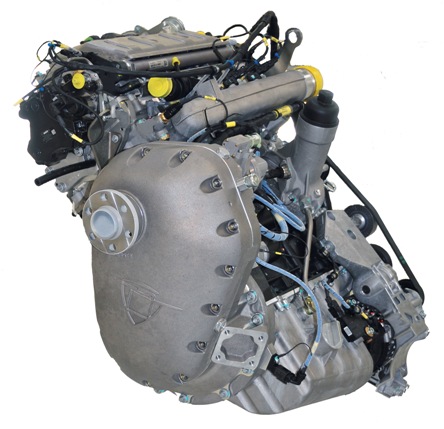
    Diamond certifies Austro AE 300 turbo-diesel

    Diamond Aircraft has received European type certification for its turbo-diesel Austro AE 300 engine, a development the company says “secures its future.”

    Diamond had been scrambling to develop an alternative to the Thielert Centurion 2.0 turbo-diesel engine after Thielert filed for bankruptcy in April last year. The Centurion powers more than 400 DA40 piston singles and more than 500 DA42 twins. Diamond has not ruled out offering a Thielert option on future aircraft assuming the company recovers after a pending sale.

    “The complete program developed into one that was significantly more complex than originally anticipated,” says Diamond CEO Christian Dries of the certification effort, which ultimately took 42 months to complete at a cost of  €48 million. Dries says there are already 27 DA42 NG aircraft powered by AE 300 engines on the production line and type certificate for the aircraft is expected “imminently”.

    Dries says Diamond next will certify the engine as forward-fit for the DA40 and DA50, and will develop an AE 300-powered version of the DA42 multi-purpose platform. The company will also offer a retrofit version for its existing Thielert diesel-powered aircraft.

    So if all goes well those diesel engined dreams of avoiding all the problems with traditional engines may be alive again.Austro Engine

  • Thielert Engine

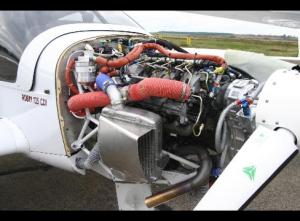
    The aircraft engine I always thought needed more development was the diesel engine. It was used in the past by large aircraft and even airships but they were always considered to be big and complicated for small single or twin engined aircraft. But a company from Liechtensteincalled Thielert changed all that.


    They developed an engine from the Mercedes A-class automotive power unit, which has been certified for use in aircraft by the FAA and is in use in several hundred aircraft around the world. The only problem is that Thielert have gone into liquidation. This leaves several hundred owners and companies with no support for the engine in their aircraft. Spares are becoming scarce and expensive and there is no other company authorized to do the work on them. Furthermore the gearbox and clutch between the engine and the propeller has to be inspected every 300 hours. This is a very expensive exercise, as it had to be removed and shipped to the factory for the inspection.


     Cessna, with all their business experience find themselves in the same boat with 160 Thielert powered 172’s to be delivered this year and no engines to put into them. An Austrian company called Diamond are the other manufacturer who have many hundreds of aircraft powered by Thielert’s diesel engines. There are other engines being developed which will hopefully take the place of the Theilert but they are not certified yet.


    Why all this sudden interest in diesel engines? Well you get a lot more bang for your buck as the specific fuel consumption is a lot better in a diesel therefore reducing fuel costs. The USAhad no motivation for diesels’ with the supply of cheap gasoline but that has all changed now. An additional advantage is there is no ignition to worry about and the engines have been developed to be a single lever control. This means the end to the prop and fuel mixture levers with the FADEC doing all the adjustments automatically.


    The diesel powered single engine trainer will give the pilot more time to fly the plane instead of all the engine related monitoring tasks therefore gaining more flying skills faster and reducing the amount of time spent in the air consuming that expensive fuel. The weekend flyer will also have more time to fly the aircraft instead of being preoccupied with controlling the engine, an added safety feature.


    Another advantage is the fuel it will run on. Jet A1 is going to be the fuel of choice with diesel as an alternative, this is readily available anywhere the planes fly to. Aviation Gasoline (AV Gas) is becoming a rare commodity as not all FBO’s carry it and refineries are reluctant to produce it given the small customer base. Transportation of the fuel is also a headache due to the lead content which means it normally has to be trucked everywhere to prevent lead build up in pipelines and valves. This all adds to the cost and you know whom that will be passed onto.


    So the diesel engine has a lot going for it now that it can be fitted into the small aircraft and still produce the required power. I would expect to see more being the power plant of choice when the new ones are certified. It is just a pity that Thielert went  the way they did and left a whole lot of people in a whole lot of mess.


    UPDATE

    There maybe a future for the Thielert engine after all. There are reports of several letters of interest detailing development and financing from interested parties. The insolvency administrator will evaluate the offers and reduce them to a few which will be given due diligence and a decision will be made for the engine production to be taken over.

    December 2008

    Diamond has come up with a plan for the owners due to new developments. More infomation at www.thenog.org